

Your Chart-Reading Arsenal:
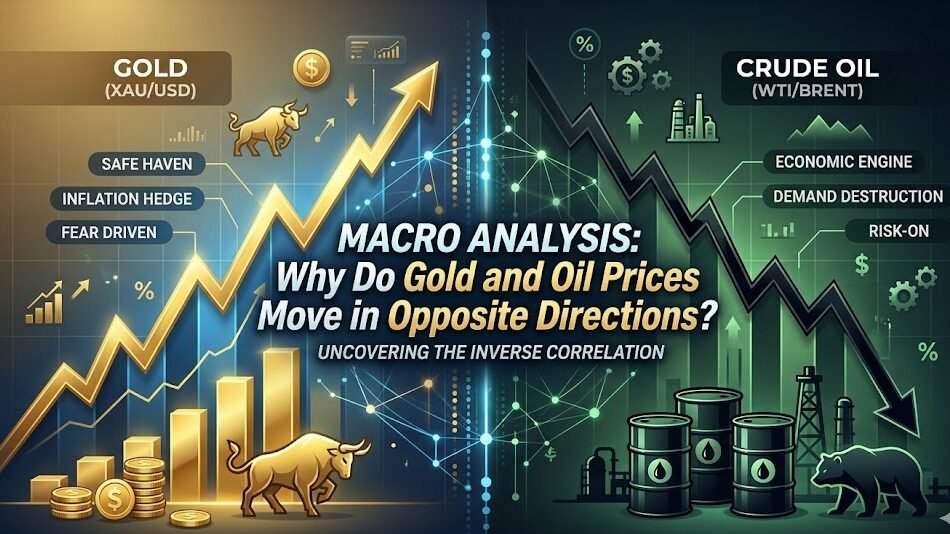
The historical divergence between gold and oil prices remains one of the most powerful macroeconomic indicators for forecasting the health of the global economy. After building a bulletproof defensive foundation in our previous Crypto Risk Management Guide, TradeBros528 investors must now elevate their skills by reading macro market psychology. Many beginners are confused as to why, during periods of economic crisis, gold violently breaks all-time highs while crude oil crashes into the abyss. The stark opposition between gold and oil prices is never a random coincidence; it is the inevitable result of capital rotation driven by supply, demand, and systemic fear.
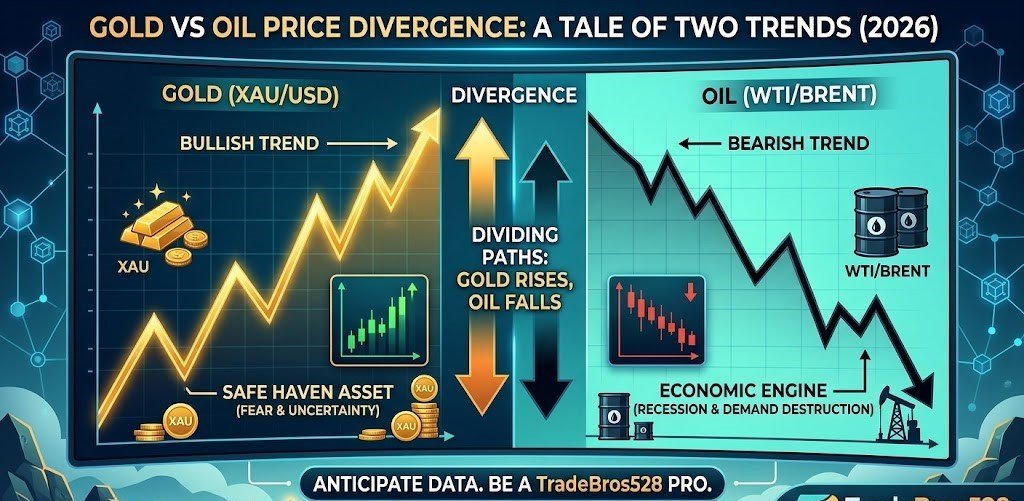
Tracking the divergence between gold and oil prices helps TradeBros528 members accurately predict global macroeconomic shifts.
The Nature of Gold: The Ultimate Safe Haven
To truly comprehend why gold and oil prices diverge, we must analyze the fundamental nature of each asset. For thousands of years, gold has served as the ultimate “Safe Haven.” When the macroeconomic landscape shows signs of severe instability—such as hyperinflation, geopolitical warfare, or an impending recession—institutional liquidity aggressively flees from risk-on assets (stocks, real estate) and floods into gold. Gold does not yield interest, but it reliably protects purchasing power against fiat currency devaluation. Pure market fear is the rocket fuel that propels gold higher.
The Nature of Oil: The Engine of the Economy
In stark contrast to gold, crude oil (and its refined gasoline products) is the literal lifeblood of the physical economy. Oil valuation is absolutely dependent on economic expansion. When the global economy is booming, factories operate at maximum capacity, global logistics thrive, and massive energy consumption drives oil prices to the moon. Conversely, when the dark clouds of a recession gather, manufacturing halts, consumers tighten their budgets, and travel plummets. Even if the global supply remains constant, this sudden “Demand Destruction” forces oil and gasoline prices to crash violently.
The Intersection: When Fear Defeats Growth
The inverse relationship of gold and oil prices is most visually dramatic during economic cycle transitions:
🔥 Recommended for you:
- The Recession Phase: Overwhelming fear causes investors to panic-buy precious metals (Gold goes up). Simultaneously, industrial stagnation causes global energy demand to hit rock bottom (Oil goes down). This is when their charts forcefully diverge.
- The Recovery Phase: As the economy recovers, Smart Money rotates capital out of safe havens (Gold consolidates or drops) and back into industrial production, reigniting energy demand (Oil goes up).
The Crucial Lesson for Crypto Traders
Why does tracking gold and oil prices matter to a Web3 investor? Bitcoin (BTC) is fundamentally engineered to be “Digital Gold.” When you witness crude oil crashing while physical gold skyrockets, it is a glaring siren signaling macroeconomic recession. While the crypto market might suffer a short-term liquidity shock, long-term safe-haven capital will inevitably rotate into Bitcoin as a modern inflation hedge alongside gold.
(To monitor these critical commodity metrics in real-time, professional traders rely on platforms like TradingView
Stop staring exclusively at altcoin charts. Expand your vision to global liquidity flows. By combining this macroeconomic edge with your The Ultimate Trading Guide, you will flawlessly anticipate when to aggressively deploy capital and when to retreat to safety.